
TC Fittings List

TC Clamp
A TC Clamp (Tri-Clamp) is the locking mechanism used to join two TC ferrules together. It acts as a vice that compresses the gasket between the ferrule faces, creating a leak-proof, sanitary seal.
They are designed with a wing nut so they can be tightened or removed by hand, allowing for quick maintenance and cleaning without tools.
Types of TC Clamps :
1) Single Pin (Light Duty): The most common type. It has one hinge pin and is used for standard low-to-medium pressure applications.
2) Double Pin (Heavy Duty): Has two hinges for better flexibility and alignment. It is generally more robust and easier to install in tight spaces.
3) High Pressure (Bolted): Instead of a wing nut, these use bolts and nuts. They are used for high-pressure steam or fluid lines where safety is critical.
Standard Technical Specification
Features Specification
Material------------------------------------------Stainless Steel SS304 (Standard) or SS316
Standard---------------------------------------- 3A / DIN / SMS / ISO
Size Range--------------------------------------1/2" to 12" (Common: 1.5", 2", 2.5", 3", 4")
Locking Mechanism-------------------------Wing Nut (Hand Tightened)
Hinge Type--------------------------------------Single Pin or Double Pin
Surface Finish--------------------------------- Tumbled / Matte / Polished
Working Pressure---------------------------- ~7 to 10 Bar (Depends on size and temp)
Application------------------------------------- Food, Dairy, Beverage, Pharma processing lines

TC Reducer
A TC Reducer (Tri-Clamp Reducer) is a sanitary fitting used to connect two pipes or tubes of different diameters within a processing line.
Unlike standard industrial reducers that might be threaded or welded, TC reducers feature a Tri-Clamp flange on both ends, allowing for easy removal and cleaning.
Types of TC Reducers
There are two distinct types, each serving a specific purpose:
Concentric Reducer: Shaped like a cone. The center of the inlet aligns with the center of the outlet.
Use: Vertical pipelines. It allows fluid to flow down the center evenly.
Eccentric Reducer: One side is flat while the other is angled.
Use: Horizontal pipelines. The flat side is installed on the bottom to prevent liquid from pooling (self-draining), which is critical in food and dairy industries to prevent bacterial growth.

TC Plain Bend
A TC Plain Bend, technically known as a Sanitary 90° Elbow (or 45° Elbow), is a fitting used to change the direction of the fluid flow in a processing line.
The term "Plain" usually implies that it is a smooth, continuous curve without any additional ports, valves, or inspection glasses attached to it. It provides a seamless transition for the liquid.
Key Features
Long Radius: Unlike standard industrial plumbing elbows which can be sharp, sanitary TC bends usually have a "Long Radius" (1.5 times the tube diameter). This reduces friction and ensures the fluid flows smoothly without turbulence.
Hygiene: The interior is polished to a mirror finish to ensure no product sticks to the walls (vital for CIP - Clean In Place systems).
TC Ends: It features Tri-Clamp ferrules on both ends for quick assembly and disassembly.
TC Seamless Tee
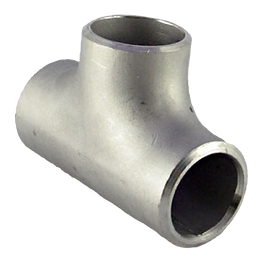
A TC Seamless Tee is a T-shaped sanitary fitting used to split or combine fluid flow in three directions.
The term "Seamless" is the critical differentiator here. Unlike a standard welded tee (where a branch is welded onto a main tube), a Seamless Tee is typically manufactured (hydroformed or cold-extruded) from a single piece of seamless tubing. This means there is no weld seam at the branch intersection.
Why "Seamless" Matters
Hygiene: Without a weld seam, there is zero risk of microscopic cracks, pits, or corrosion zones where bacteria could hide. This is essential for high-purity Pharmaceutical (WFI) and Biotech applications.
Strength: The structural integrity is uniform throughout the fitting, making it stronger under pressure than a welded counterpart.
Flow: The internal junction is perfectly smooth (radiused), promoting better flow characteristics.
Types of TC Tees
Equal Tee: All three ends (Main run and Branch) are the same size.
Reducing Tee: The branch (middle port) is smaller than the main run (e.g., a 2" run with a 1" branch).
Short Outlet vs. Long Outlet: Refers to the length of the branch; "Seamless" tees often have slightly shorter, curved branches due to the manufacturing process.

TC Bend
A TC Bend (Tri-Clamp Bend) is a curved sanitary fitting used to change the direction of a pipeline. While often used interchangeably with "Elbow," a "Bend" technically implies a smoother, sweeping curve (longer radius) which creates less resistance to flow than a sharp elbow.
These are critical in hygienic systems because the smooth curve prevents product buildup and allows for easy cleaning (CIP - Clean In Place).
Common Angles
90° Bend: The most standard type, turning the flow at a right angle.
45° Bend: Used for partial turns or offsets.
180° Bend (U-Bend): Used to reverse flow direction, often found in flow panels or return loops.
Key Difference: Bend vs. Elbow
Elbow: Can sometimes refer to a shorter, sharper turn.
Bend: Usually refers to a Long Radius curve. In sanitary (food/pharma) lines, Bends are preferred because they cause less turbulence and are gentler on the product (especially important for dairy or fragile liquids).

TC Plain Tee
A TC Plain Tee (also called a Sanitary Equal Tee) is a T-shaped pipe fitting used to split a single fluid stream into two separate streams, or to combine two streams into one.
The term "Plain" or "Equal" indicates that all three openings (the main run and the branch) are of the same diameter. It differs from a "Reducing Tee," where the branch port is smaller than the main run.
Key Features
Full Flow: Designed with smooth internal curves to prevent product entrapment or pressure drop.
Hygienic Design: Like other TC fittings, it is polished internally to meet sanitary standards, making it easy to clean (CIP).
Versatility: Used frequently to add sensors (like temperature probes) or pressure gauges into a line without interrupting the main flow.

TC Union
A TC Union (Tri-Clamp Union) refers to the complete sanitary connection assembly used to join two pipes or fittings together.
While individual parts are often sold separately (ferrules, clamps, gaskets), a "TC Union" is the collective term for the entire set required to make one connection. It is the sanitary equivalent of a flanged joint in industrial piping but is designed for frequent disassembly and cleaning.
Components of a TC Union
A complete TC Union consists of four specific parts:
2 x Ferrules: The flanged ends that are welded to the pipes (one on each side).
1 x Gasket: The seal that sits between the two ferrules (Silicone, EPDM, or PTFE).
1 x Clamp: The locking mechanism that holds the ferrules together.